A detailed comparison - updated February 2026
The short answer
- Choose ISJ if: You live in South Jakarta (Pondok Indah, Kemang, Cipete, Cilandak), your children are primary age, and you want a small British prep school with expert teachers, small classes, and a pure British curriculum.
- Choose BSJ if: You live in Bintaro (or plan to), you want an unbroken K-13 pathway, and you're comfortable with an IB secondary programme rather than A-Levels.
If you're looking for a British international school in Jakarta, two names come up immediately: The Independent School of Jakarta (ISJ) and British School Jakarta (BSJ). Both are genuine British schools with strong reputations. And yet they're quite different institutions, and the right choice between them depends almost entirely on where you live and what you specifically want.
At a Glance
|
ISJ |
BSJ |
| Location |
Pondok Indah, South Jakarta |
Bintaro, South Tangerang |
| Age range |
2-13 (Pre-Nursery to Year 8) |
3-18 (Foundation to Year 13) |
| Primary curriculum |
English National Curriculum (pure) |
English National Curriculum |
| Secondary curriculum |
Expanding to A-Levels (K-12 pathway) |
IB MYP → IB Diploma |
| School size |
~300 students |
~1,400 students |
| Typical class size |
16-20 |
22-26 |
| Accreditation |
UK inspected, BSO in progress |
CIS, BSO, COBIS |
| Ownership |
The Schools Trust (UK Charity) |
Yayasan (Foundation) / Board of Governors |
| Annual fees |
~$8,881-$29,131 |
~$8,933-$31,613 |
| From Pondok Indah |
5-15 minutes |
45-70 minutes (school run) |
Location: The Factor That Usually Decides It
This is the most important variable for most families, and it's worth being direct about it.
ISJ is in Pondok Indah - the heart of South Jakarta's expat cluster. If you live in Pondok Indah itself, the school is minutes away. If you're in Kemang, Cipete, or Cilandak, it's 10-20 minutes. This is an easy commute by Jakarta standards.
BSJ is in Bintaro - administratively part of South Tangerang, outside the Jakarta city boundary. In traffic-free conditions, Bintaro is about 30-35 minutes from Pondok Indah. During the morning school run, that becomes 50-70 minutes, consistently, every day. For families in Kemang or Cipete, it's similar.
For families who live in Bintaro - and many do, specifically because of BSJ - this is a non-issue. But for families in central South Jakarta weighing up the two schools, the Bintaro commute is a genuine and daily friction that compounds over time. See our guide to Jakarta school commutes for the detail, and use the commute time calculator.
Our recommendationIf you plan to live in South Jakarta, the BSJ commute will be a meaningful negative in your daily life. If you're specifically moving to Bintaro, or already live there, the location question resolves itself in BSJ's favour.
Age Range and the Secondary Question
ISJ currently educates children from age 2 to Year 8 (age 13), but is opening a secondary campus next to its current site. This means that current and future pupils will be able to continue their education at ISJ all the way through to A-Levels. This shifts the dynamic significantly, removing the need for a secondary transition and making ISJ a complete K-12 pathway alongside its expert faculty and intimate learning environment.
BSJ runs to Year 13, offering an unbroken pathway from Foundation through to the IB Diploma. For families who anticipate being in Jakarta through their child's secondary years and want to avoid a secondary transition, BSJ removes that logistical complexity.
The implication: With ISJ's upcoming secondary expansion, the age range question is less of a deciding factor than it used to be. Both schools now offer or are building toward a continuous K-12/13 pathway. The choice becomes more about whether you prefer ISJ's smaller, intimate setting and pure British A-Level track, or BSJ's established large-scale campus and IB pathway. See ISJ entry information and age guidelines.
Curriculum: British vs British/IB
Both schools use the English National Curriculum in the early years. The significant divergence comes in secondary.
At ISJ, the curriculum is the English National Curriculum throughout - the same framework used by British independent schools in the UK: Key Stages, defined content, and a clear pathway toward GCSEs and A-Levels.
At BSJ, the early years use the English National Curriculum, but from Year 7 the school transitions to the IB Middle Years Programme (MYP), then the IB Diploma from Year 12. This makes BSJ, in practice, a British-primary, IB-secondary school. The IB Diploma is an excellent qualification recognised by UK universities, but it is not A-Levels - families who specifically want the British A-Level pathway should understand this clearly.
For a deeper explanation of what each curriculum means in practice, see our guide to British vs IB vs American curriculum and ISJ's curriculum guide.
School Size and Character
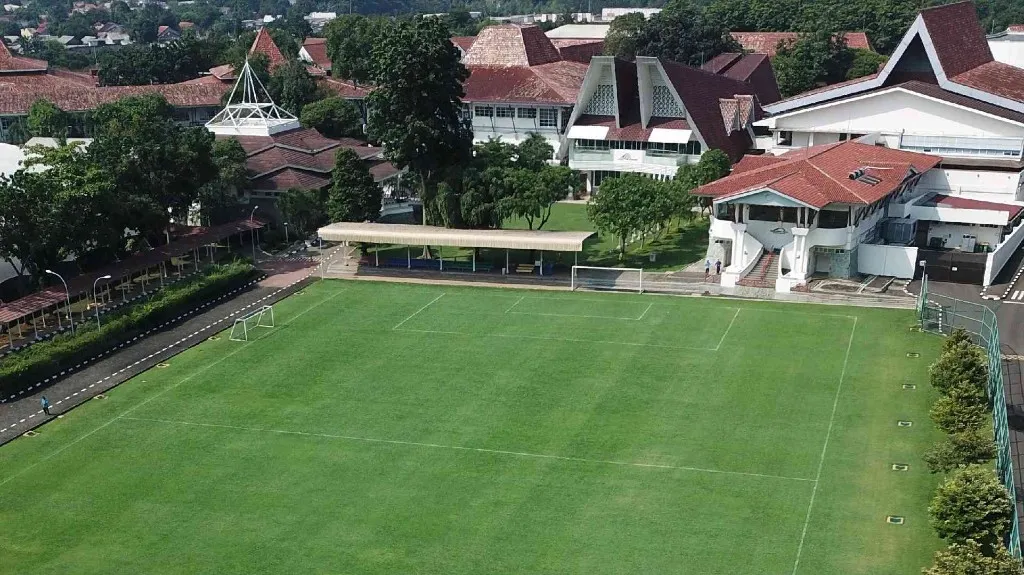
ISJ is a small school - approximately 300 students at full capacity. Teachers know every child. The head is visible and accessible. New families are absorbed quickly into a community where names are known and pastoral relationships develop naturally.
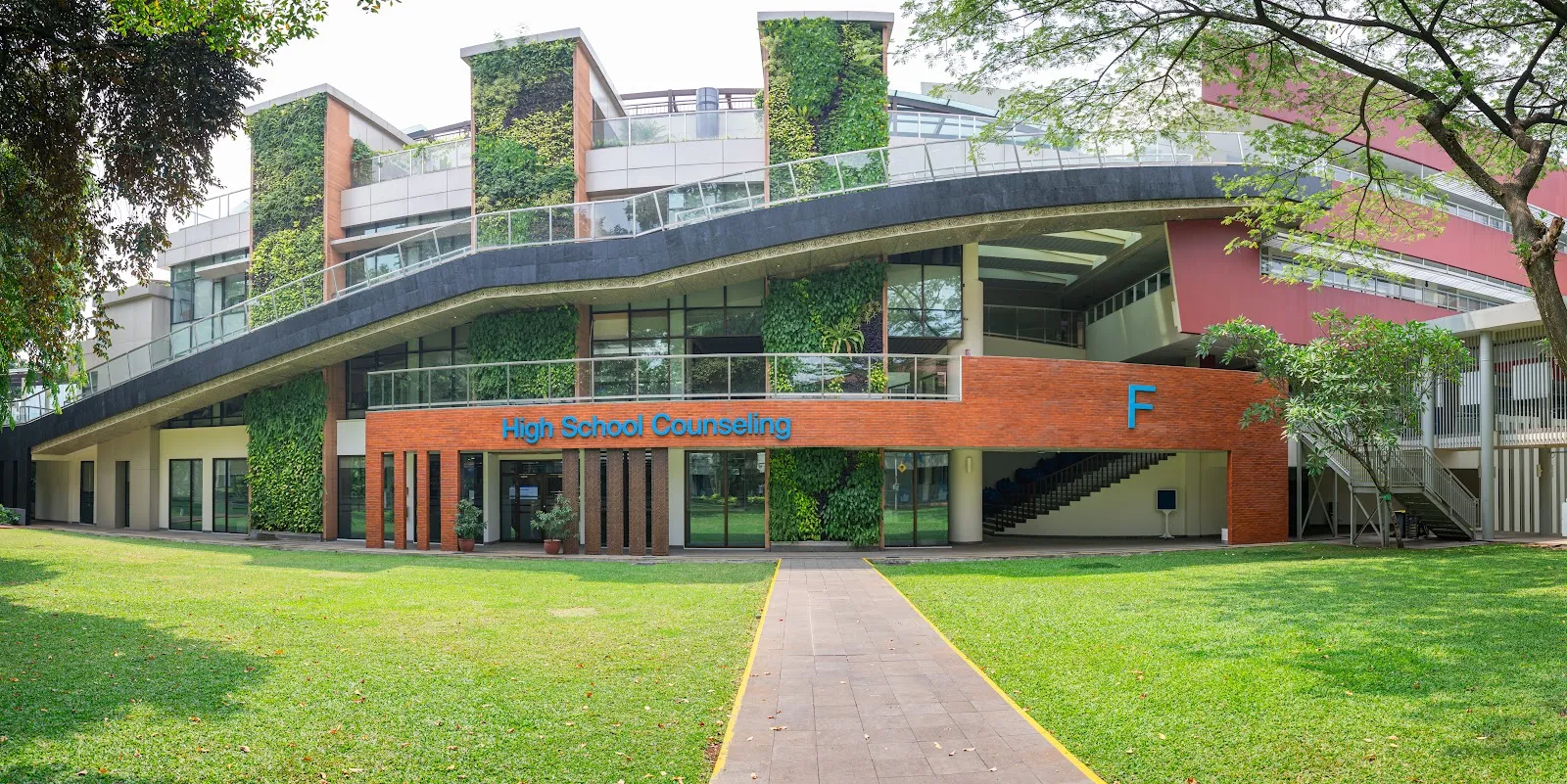
BSJ, with around 1,400 students, operates more like a medium-sized British school. It has greater breadth - more sports teams, more co-curricular options, more elective subjects at secondary. It also has more specialist staff and more developed systems. The trade-off is intimacy: in a school of 1,400, teachers know their classes but not every student in the school.
For children who are confident and will use a larger school's breadth, BSJ's scale is an asset. For younger children, children settling into a new country, or children who do better with known teachers and a smaller community, ISJ's size is a significant advantage. See our pages on the prep school and Pre-Prep at ISJ.
Academic Standards
Both schools maintain strong academic standards.
ISJ measures outcomes against GL Education standardised assessments, consistently placing in the top decile of international schools globally - English mean SAS 122, Mathematics 118.7, Science 119.7. These are objective, external benchmarks that allow comparison across schools worldwide, not internal school-generated data. See the full academic results and how ISJ achieves academic excellence.
BSJ publishes its IB Diploma results and has consistently achieved scores above the world average. University placement results are solid, with graduates attending institutions in the UK, US, Australia, and elsewhere.
Both schools recruit teachers from the UK. ISJ's recruitment is specifically from UK independent schools, and all staff hold Qualified Teacher Status (QTS). BSJ recruits from a wider pool, including both state and independent sector teachers.
Fees
On headline tuition, ISJ and BSJ are in a similar range: ISJ ~$8,881-$29,131 per year; BSJ ~$8,933-$31,613 per year. BSJ's upper end is slightly higher, reflecting senior years with IB examination fees. Both schools have registration fees, capital levies, and additional costs beyond the headline tuition.
Get a full written breakdown from each school for your child's specific year group before comparing numbers. See ISJ's published fee schedule and our complete guide to international school fees in Jakarta. Bursaries are available at ISJ for qualifying families.
Ownership: What It Means in Practice
ISJ is owned by The Schools Trust, a UK charity. The charitable structure means the school is legally required to operate in the interests of its pupils - any surplus is reinvested into the school.
BSJ is managed by an Indonesian foundation, Yayasan British School Jakarta. Under Indonesian law, a foundation is a non-profit legal entity. The school is overseen by a Board of Governors, responsible for the strategic direction and financial health of the institution. While it was established with the active support of the British Embassy in 1974, it is an independent entity.
Neither structure is inherently superior - there are excellent non-profit foundations and well-run private charities. Understanding how a school is governed is part of sensible due diligence.
The Verdict
Most families who visit both schools end up choosing based primarily on location and age range. If you're in South Jakarta with young children, ISJ's proximity and intimacy make it the more practical choice for the primary years. If you're in Bintaro, or if a continuous K-13 pathway specifically matters to you, BSJ earns its strong reputation.
The best way to know is to visit both. Both schools offer campus tours during term time, and walking through a school tells you things no guide can capture.
Book a tour at ISJ - small groups, hosted by the head, with live classroom access. Book here →